
Turbine Roof Ventilators in Saudi Arabia
Hot air gets trapped under the roof of your store or workshop, and the room stays hot all day. Running fans for hours also adds to your power bill. It makes sense to want fresh air without paying more for it. A turbine ventilator spins with the wind and pulls the hot air out, with no electricity at all.
We supply two ranges, stainless steel 304 and aluminium, in sizes from 100 to 600 mm. Send us your roof size or a photo of the building on WhatsApp, and we will tell you which size and how many you need. How big is your roof?
- 20+ years in Saudi Arabia
- 2 years warranty
- 1000+ Satisfied Clients
- Fast Delivery Across KSA
How a Turbine Ventilator Works
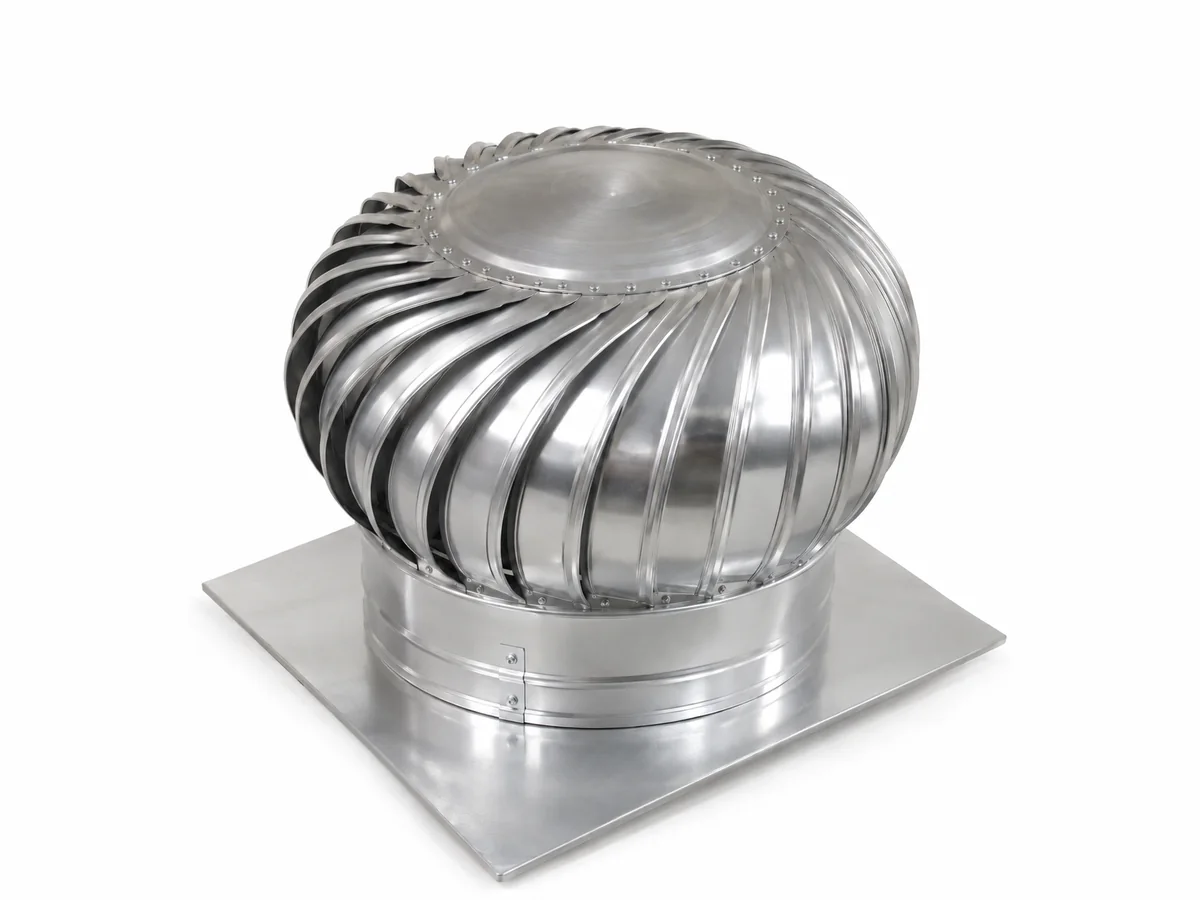
The head on top has curved vanes that spin when the wind blows. As it turns, it makes low pressure at the throat, which pulls hot air up from the building and throws it out. Hot air also rises on its own, so even on a calm day, warm air keeps escaping through the head. That means it works day and night, with no motor, no wiring and no running cost.
In the trade, people also call it a whirlybird, a wind ventilator, a roof ventilator or simply a roof turbine. It suits warehouses, workshops, farm sheds, stores and the roof space of villas. It does not replace a kitchen hood fan or a fume extract, because those need a powered fan.
Our Models: CTVS and CTVA
We keep two ranges. The CTVS range is made of stainless steel grade 304, and the CTVA range is made of aluminium. The number in each code shows the size in millimetres, so a CTVA600 is a 600 mm unit.
| Size | Stainless 304 | Aluminium |
|---|---|---|
| 100 mm | CTVS100 | Not in range |
| 150 mm | Not in range | CTVA150 |
| 200 mm | Not in range | CTVA200 |
| 250 mm | Not in range | CTVA250 |
| 300 mm | CTVS300 | CTVA300 |
| 400 mm | CTVS400 | Not in range |
| 500 mm | CTVS500 | CTVA500 |
| 600 mm | CTVS600 | CTVA600 |
Small sizes suit a single room, a toilet block or a small store. The 500 and 600 mm heads are the usual choice for warehouses, sheds and large workshops. Send us your building size if you are not sure which one fits.
Stainless 304 or Aluminium?
| Stainless 304 | Aluminium | |
|---|---|---|
| Body | Strong and stiff | Light, easy on thin roof sheets |
| Rust | Very good in dry inland air | Good in humid and salty air |
| Near the sea | Salt can cause small pits over time | Handles sea air well |
| Best for | Riyadh, Qassim, Al Kharj and other inland sites | Jeddah, Dammam, Jubail, Yanbu and other coastal sites |
Grade 304 is the most widely used stainless steel, and it resists rust well in normal air. Near the sea, salt in the air can slowly pit 304, so rinse the heads now and then if you pick stainless on the coast. Aluminium copes well with humid, salty air and puts less weight on thin metal roofs. Tell us your city, and we will suggest the right one.
How Many Do You Need?
The airflow of each head depends on its size and the wind speed. We do not publish test figures for our heads, so the table below shows one maker's published figures as a typical guide. Average wind in Riyadh is about 14 to 17 km/h through the year, so the last column is close to a normal day.
| Wind speed | 150 mm | 300 mm | 600 mm |
|---|---|---|---|
| 6 km/h | 110 m³/h | 270 m³/h | 620 m³/h |
| 12 km/h | 210 m³/h | 480 m³/h | 1,140 m³/h |
| 16 km/h | 280 m³/h | 620 m³/h | 1,420 m³/h |
Take a workshop that is 20 m long, 15 m wide and 6 m high. That is 1,800 m³ of air, and 8 air changes an hour is a common target for light industry. So the workshop needs about 14,400 m³/h, which is roughly ten 600 mm heads on a normal day. Spread them along the ridge so the whole floor gets air.
Turbines only pull air out, so the building also needs a way for air to come in. Low wall louvers, open doors or windows let fresh air in near the floor while hot air leaves at the top. Without them, the heads spin but move very little air.
Installing on a Saudi Roof
Fit the heads at the highest part of the roof, where the hottest air collects. Space them evenly so the whole floor gets air, not just one corner. Seal the base and the flashing well, because most leaks of rain and blowing sand come from a poor seal, not from the head. Check once or twice a year that each head spins freely, since worn bearings are the most common fault. Tell us if your roof is flat or sloped, and if it is metal sheet or concrete.
Turbine or Powered Roof Fan?
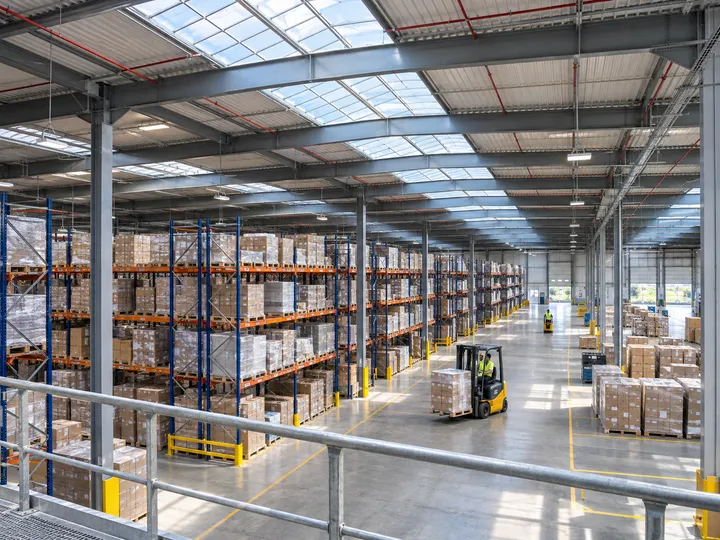
A turbine costs nothing to run and needs no wiring, but its airflow rises and falls with the wind. A powered roof fan moves a set amount of air at any time, which you need for kitchens, fumes and busy factories. Many warehouses use both, with turbines along the ridge and a few powered fans for the hottest days.Roof fans
Prices
Our turbine heads start from SAR 200. The final price depends on the size, the material and how many you need. Send us your list on WhatsApp, and we will send you a fast quote.
Get a Quote for Your Roof
Send us your roof length and width, the height of the building and your city. Tell us if the roof is flat or sloped, and if it is metal sheet or concrete. We will suggest the size, the material and how many heads you need. We deliver from Riyadh across the Kingdom, including Al Kharj, Qassim, Jeddah and Dammam. What kind of building is it for?
Frequently Asked Questions
Does it work when there is no wind?
Yes, but less. Hot air rises through the throat on its own, so warm air keeps escaping on a calm day. With even a light breeze, the head spins and pulls out much more.
Will rain or sand get in?
The top dome and the curved vanes keep most rain out, and the spinning head throws drops outward. Most problems come from a poor seal at the base or the flashing, not from the head itself. Fit it with a good seal, and screen the low wall openings to cut down on sand.
How long does it last?
The vanes and body last for many years in sun and dust. The part that wears is the bearing, so check that the head spins freely once or twice a year. If it starts to squeak or stick, ask us about a replacement.
Should I choose stainless or aluminium near the sea?
Aluminium is usually the better choice in Jeddah, Dammam, Jubail and Yanbu, because it handles salty air well. Stainless 304 can also work there, but it needs rinsing now and then to stop small pits. Inland, stainless 304 gives the strongest, longest lasting head.
How many do I need?
Multiply the length, width and height of the building to get its volume in cubic metres. Multiply that by the air changes you want each hour, then divide by the airflow of one head. Send us the size of your building, and we will do the sum for you.