
Industrial Centrifugal Blower Supplier in Saudi Arabia
Centrifugal blowers for grease exhaust, equipment ventilation, industrial air movement, ducted exhaust, and medium pressure applications.
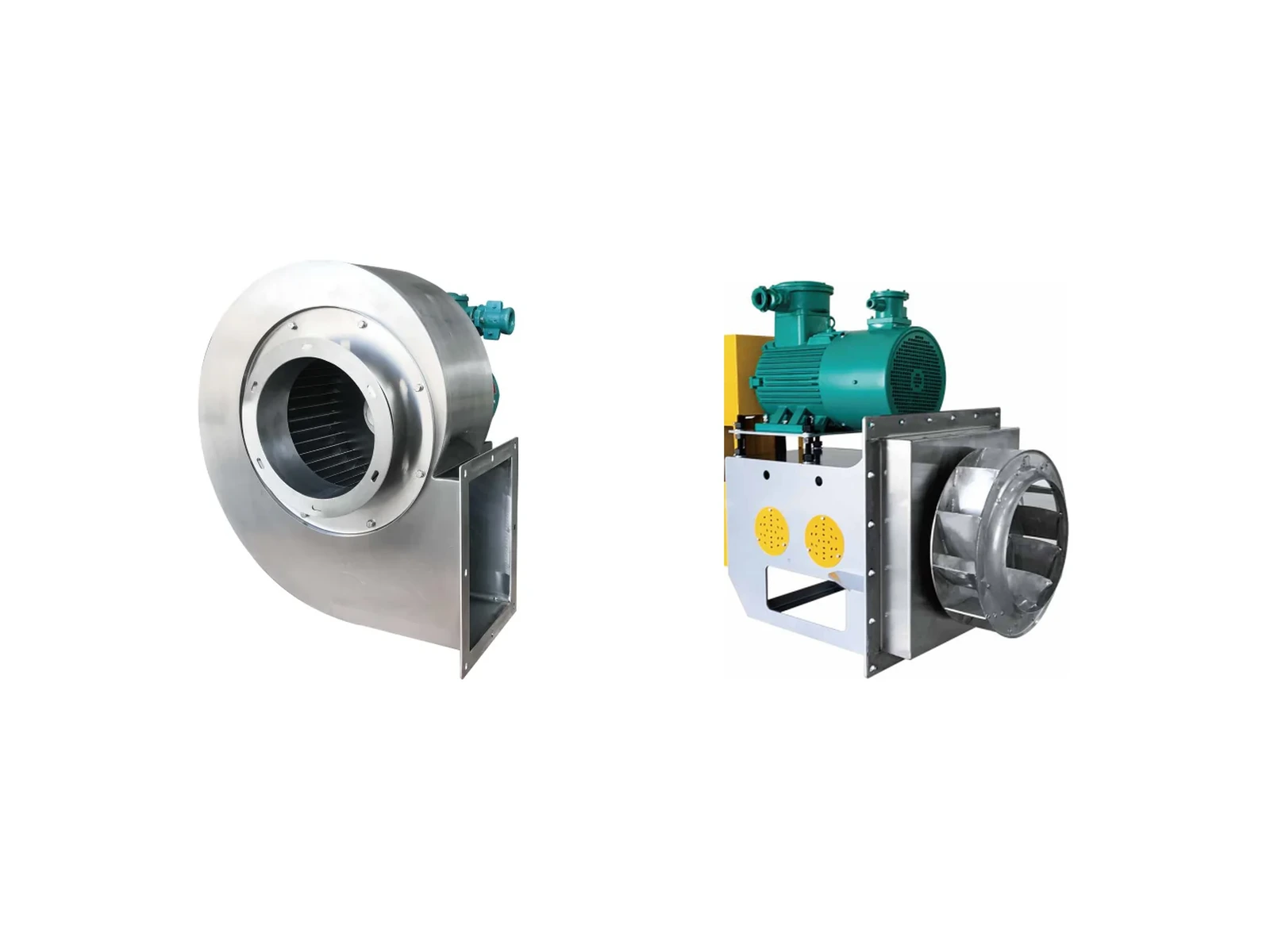
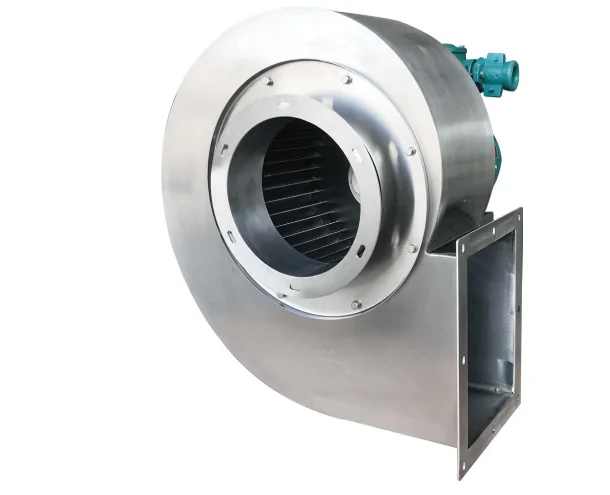
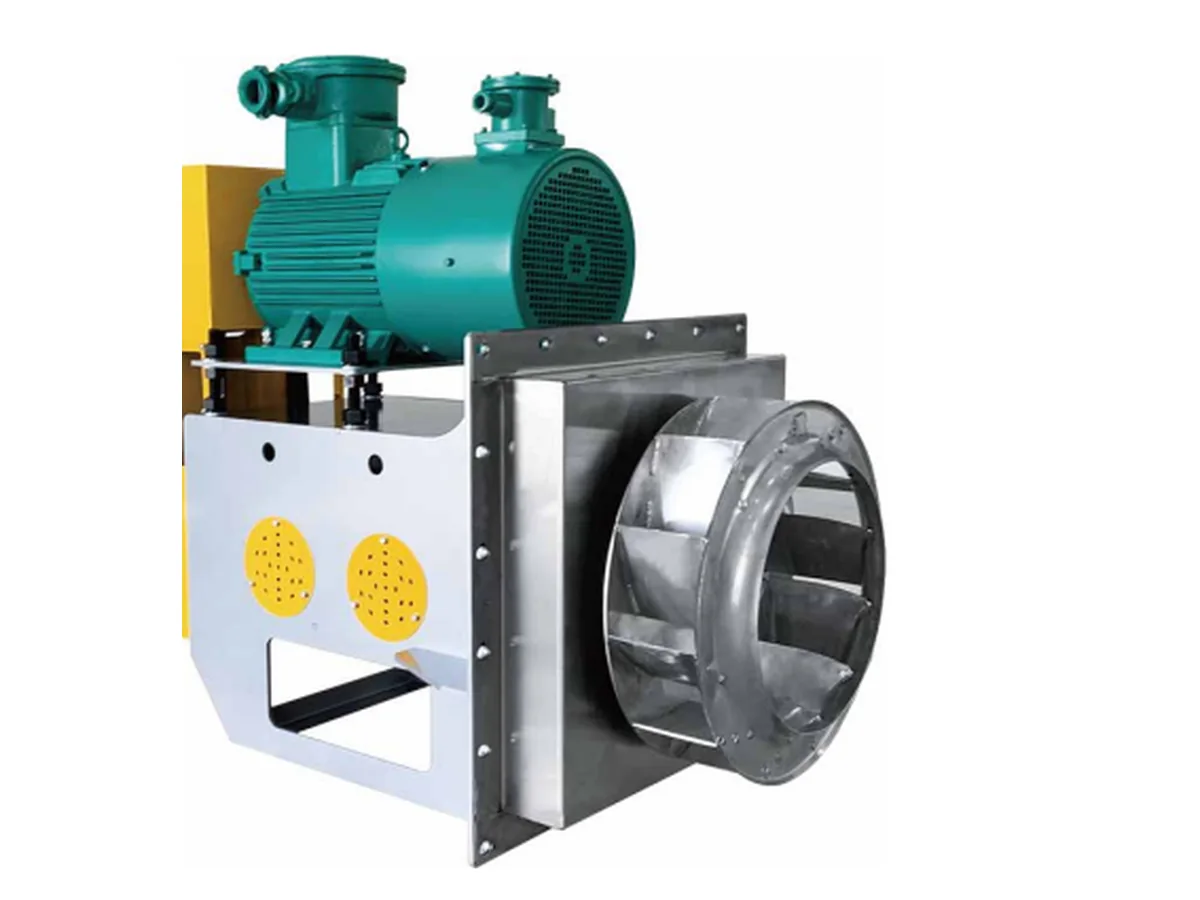
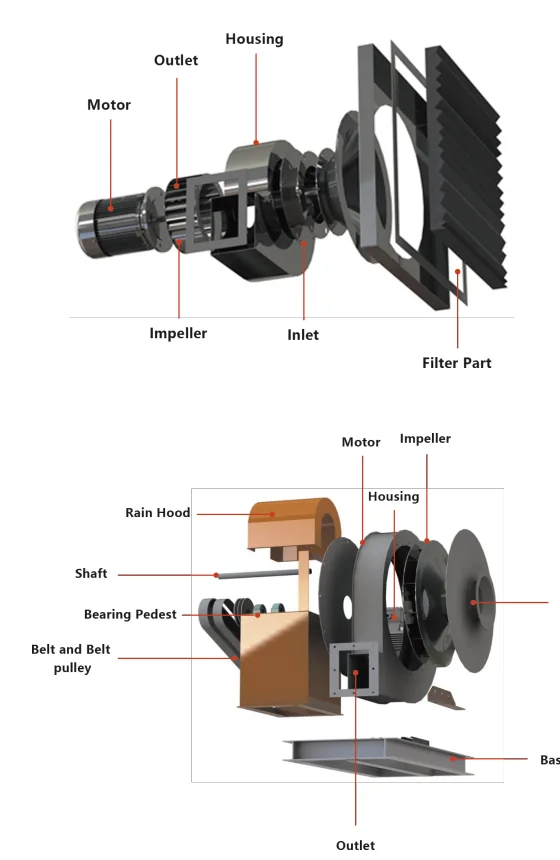
What is a centrifugal blower and when should it be used?
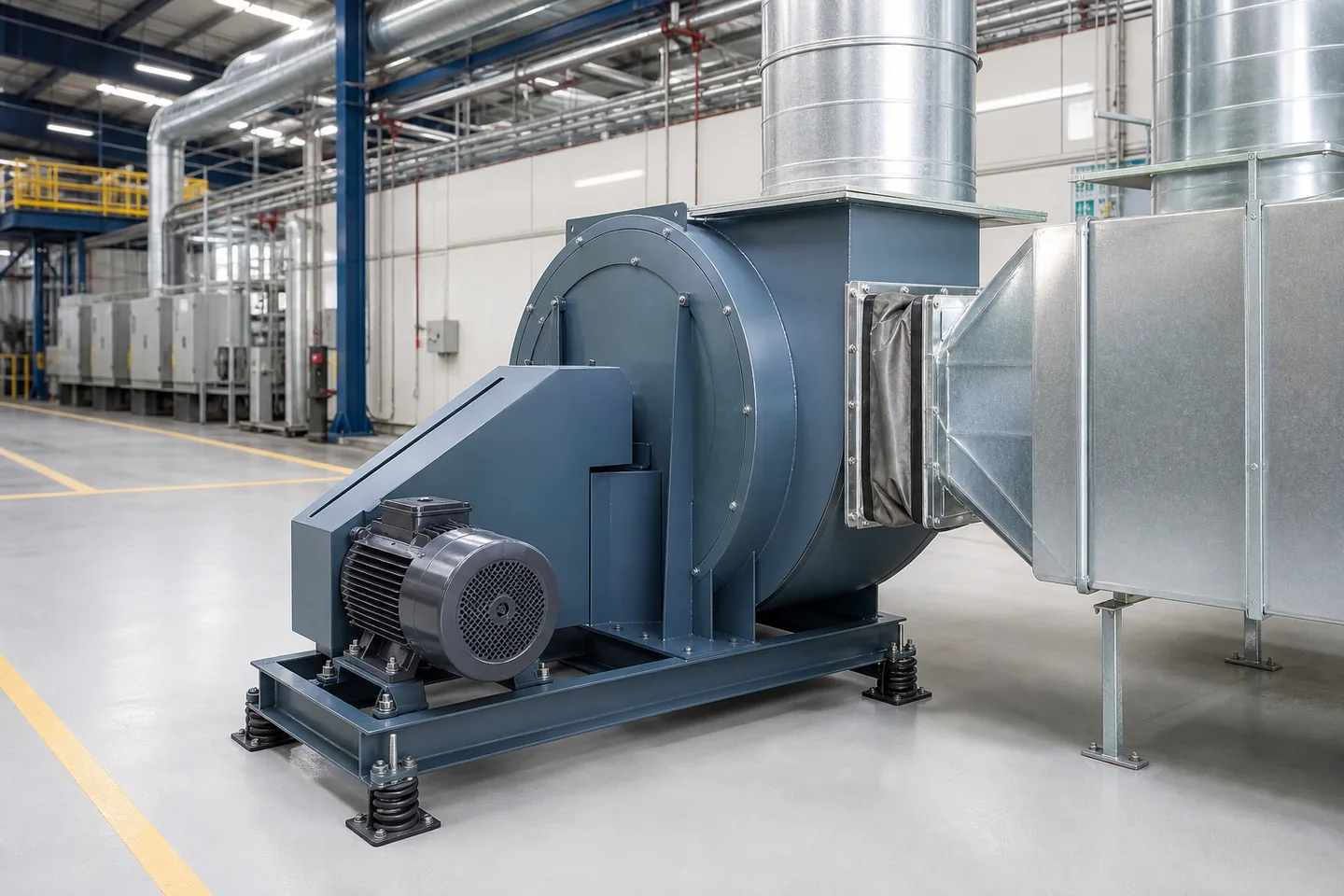
A centrifugal blower draws air through its inlet and discharges it radially from the blower housing. It is selected for ducted exhaust, grease exhaust, equipment ventilation, process air movement, and industrial ventilation where pressure resistance is higher than a simple axial fan can handle.
For Saudi Arabia projects, blower selection should be based on CFM, static pressure, air temperature, material or coating requirement, motor power, voltage, duct connection, and whether the fan is handling clean air, grease-laden air, fumes, heat, or equipment exhaust.
Centrifugal Blower Products
Choose centrifugal blower products when the project needs ducted exhaust, medium pressure, higher pressure, equipment ventilation, or grease exhaust support rather than simple open-wall airflow.
Industrial Centrifugal Blower
DE-series medium-pressure centrifugal blowers (DE250–DE600, up to 13,765 CFM) for engineered clean-air, equipment booster, and special-order exhaust systems.
View ProductCBA Direct Drive Centrifugal Blower
CBA-BA direct-drive centrifugal blowers (CBA03 to CBA28, up to 19,417 CFM) for high-pressure industrial clean-air ventilation up to 17" SP (4,250 Pa).
View ProductIndustrial Centrifugal Blower
DE-series medium-pressure centrifugal blowers (DE250–DE600, up to 13,765 CFM) for engineered clean-air, equipment booster, and special-order exhaust systems.
View ProductCBA Direct Drive Centrifugal Blower
CBA-BA direct-drive centrifugal blowers (CBA03 to CBA28, up to 19,417 CFM) for high-pressure industrial clean-air ventilation up to 17" SP (4,250 Pa).
View ProductCompare centrifugal blower options
Use this quick comparison to choose the closest product direction before sending airflow, voltage, quantity, and project city for quotation.
| Product type | Best for | Pressure / duct direction | Important limitation | Confirm before quote | Page |
|---|---|---|---|---|---|
| Industrial Centrifugal Blower | Engineered medium-pressure duct exhaust, equipment cooling booster, and special-order ventilation | Round inlet with rectangular flanged discharge; DE-A direct drive and engineered belt-drive assemblies | Standard DE models are clean-air rated; commercial kitchen grease exhaust, hot gas, or explosive atmospheres require written configuration approval and code acceptance | Required CFM at static pressure, air condition & temperature, drive type (direct DE-A vs belt), inlet/outlet dimensions, discharge angle, voltage (220V vs 380V 60Hz), material, accessories, quantity, and project city | View |
| CBA Direct Drive Centrifugal Blower | High-pressure clean-air industrial ventilation, process air boosting, and equipment exhaust up to 17" SP (4,250 Pa) | Direct-drive centrifugal arrangement (CBA-BA) with 6 standard discharge orientations; clockwise/counter-clockwise position must match duct layout | Standard CBA-BA direct-drive units are clean-air rated; corrosive gases, high temperatures, or explosive atmospheres require separately certified engineered configurations | Required CFM at static pressure, air condition & temperature, drive style (direct CBA-BA vs belt), housing material, discharge angle, voltage (220V vs 380V 60Hz), quantity, and project city | View |
Common project applications
What to send before quotation
Engineering & Application Safety Notice
Do not select a centrifugal blower by CFM alone. The required airflow and static or total pressure must be checked against the model performance curve and the complete duct-system resistance. Standard blower construction is not automatically suitable for grease-laden air, smoke control, fire duty, explosive dust or gas, corrosive fumes, or high-temperature exhaust. Confirm air composition, temperature, material, motor location, drive arrangement, spark-resistance or certification requirements, cleaning access, discharge orientation, and applicable project codes with the mechanical engineer or consultant.
Project accessories and procurement support
Accessories and documents depend on the selected model, installation condition, consultant requirement, and project approval workflow.
Centrifugal Blower support for Saudi projects
Share the project city during quotation so product availability, delivery direction, and documentation needs can be reviewed for your Saudi Arabia project.
Common centrifugal blower questions
Short answers for contractors, MEP teams, procurement buyers, and facility teams preparing a quotation request.
When should a centrifugal blower be used?
A centrifugal blower is reviewed when the application has duct resistance, pressure requirement, grease exhaust, equipment ventilation, or industrial air movement needs.
What is the difference between static pressure and total pressure for a blower?
Static pressure represents the resistance the blower must overcome in the duct system. Total pressure includes static pressure plus velocity pressure. Use the pressure value and definition shown in the approved design or equipment schedule when matching the blower performance curve.
Should I choose a direct-drive or belt-drive centrifugal blower?
Direct drive can offer a compact arrangement with fewer transmission components. Belt drive can provide more flexibility for speed, motor position, and some maintenance requirements. The correct arrangement depends on airflow, pressure, temperature, access, motor location, and the selected model.
Can a standard centrifugal blower handle corrosive fumes, explosive gas, or high-temperature air?
Not automatically. These duties require an engineered review of temperature limits, gas or dust classification, material compatibility, motor and electrical classification, spark resistance, seals, coatings, drive arrangement, and required certifications before a product is offered.
What is needed to select a centrifugal blower?
Send CFM, static pressure, air temperature, voltage, phase, application, material or coating requirement, quantity, and project city.
Can centrifugal blowers support grease exhaust?
Some centrifugal blowers can support grease exhaust applications when selected with suitable construction, motor, access, and installation details.
What is the difference between an axial fan and a centrifugal blower?
Axial fans move high airflow at lower pressure. Centrifugal blowers are better when ducts, filters, bends, hoods, or process equipment create higher static pressure.
What affects centrifugal blower price?
Price depends on airflow, static pressure, motor power, drive type, material, coating, accessories, quantity, documents, and project location.